
Inthe rapidly evolving landscape of healthcare, data-driven decision making and artificial intelligence (AI) have emerged as pivotal components of clinical innovation. At Reimagined Consulting, a consulting firm specializing in data, interoperability, analytics, and AI implementation in healthcare, we are partnering with organizations to bring these innovations to the industry. Leading healthcare organizations are already deeply investing in Generative AI as its potential continues to grow. Below are key areas to understand as your organization begins broader experimentation and adoption.
Prioritize Data Governance: Executives need to establish robust data governance frameworks to ensure the integrity, security, and confidentiality of healthcare data. This includes implementing policies for data usage, storage, and sharing, and ensuring compliance with regulatory standards such as HIPAA. Generative AI technologies have reached a point where having a conversation with your data, asking questions like “How many patients had unplanned discharges last week?” or “How are my counselors’ caseloads?” is possible. This accessibility and shared context will dramatically enhance situational awareness but require investment in a shared vision of organizational metrics. Some of the biggest barriers in the implementation of Generative AI are a lack of accessible, centralized data and organizational data governance.
Focus on Interoperability: As data becomes more integral to healthcare, the ability for systems to interact seamlessly is vital. Executives should ensure that interoperability is a key consideration in any new technological or strategic implementation. Closed APIs and limited backend access are non-starters for today’s solutions.
Invest in Education: With the evolving landscape of AI, continual learning is crucial. Executives need to stay informed about the latest trends, research, and developments in AI, data analytics, and healthcare. Participating in industry conferences, webinars, and other educational opportunities is a good way to stay updated. Get updates on AI & Data in healthcare from us reaching out to us here.
Embrace Digital Transformation: Executives must continue to foster a culture of digital readiness within their organizations. This can involve encouraging technological adoption, investing in digital infrastructure, and facilitating upskilling initiatives to ensure their teams are prepared for the transition.
Start Now: The largest players in HIPAA-compliant Generative AI solutions are major cloud providers, such as Microsoft (with its partnership with OpenAI), Google, and AWS. All three are moving at an unprecedented pace, healthcare software vendors like Epic have already formed strategic partnerships to access these capabilities first. Demand is still outpacing supply as the general novelty wears off and industry-specific use cases come into focus. Google’s Med-Palm 2 model, which achieved a passing grade on the US Medical License Exam, has already built up an extensive waitlist while early movers are already testing and deploying it in hospitals. Azure’s OpenAI cognitive services models, including gpt-3.5-turbo (ChatGPT) and GPT-4, have also built-up large waitlists and quota restrictions. At Reimagined, we have been utilizing GPT-3.5 in Microsoft Azure to develop a number of use cases focused on Behavioral Health. One of the simplest is simply enabling a ChatGPT-style interface in a HIPAA-compliant environment. This allows organizations to easily and securely enable their organization with the technology and more importantly, begin collecting use cases to align investments.
You can read more about the promising early use cases below.
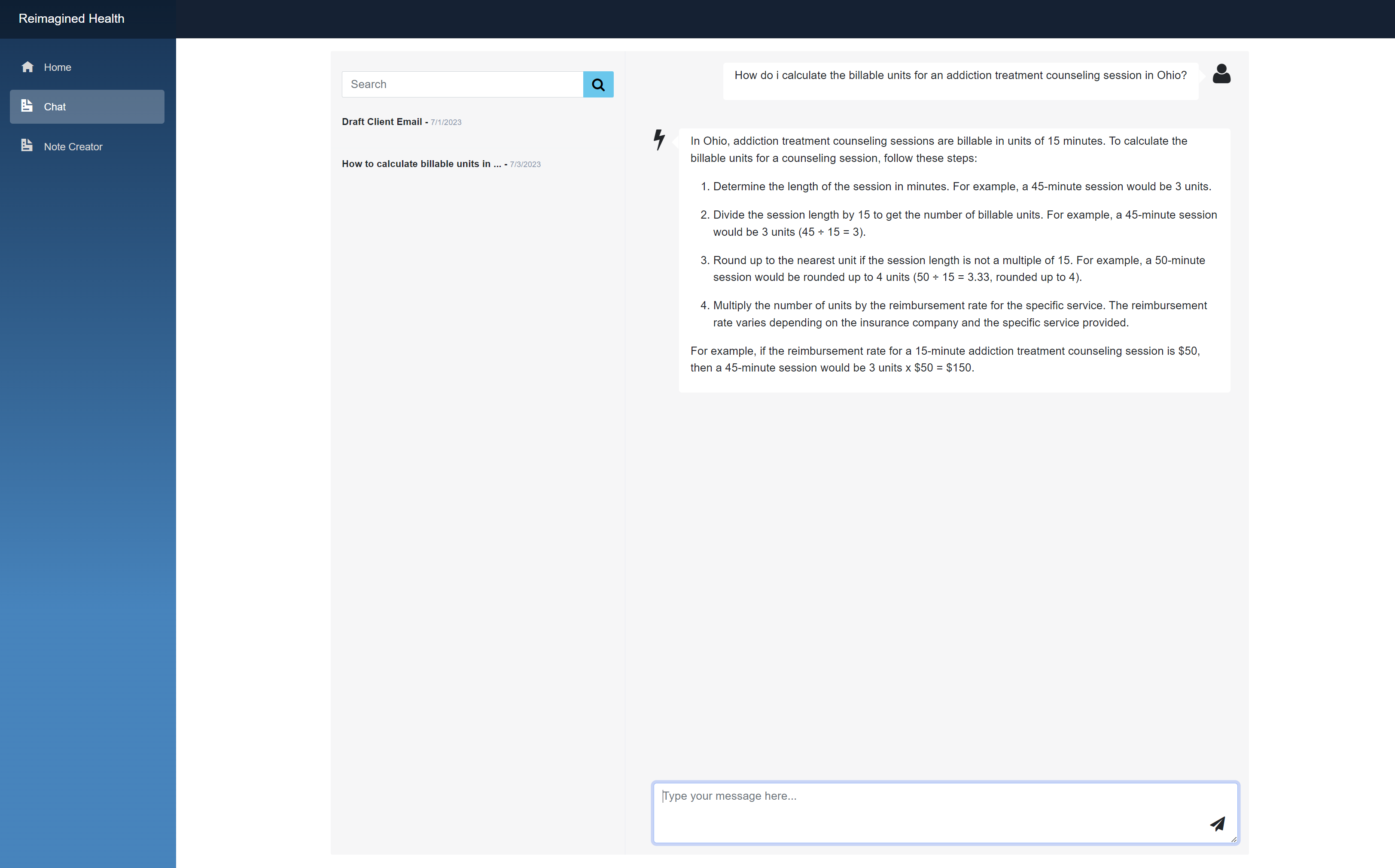
The photo above illustrates how GPT can streamline the accessibility of SOP documentation for your staff. Enriched with a vast pool of information, GPT can incorporate your specific data to enhance support for clinicians. Leveraging this technology not only aids in training but also bolsters ongoing assistance, mitigating data entry errors and ensuring timely procedural updates.
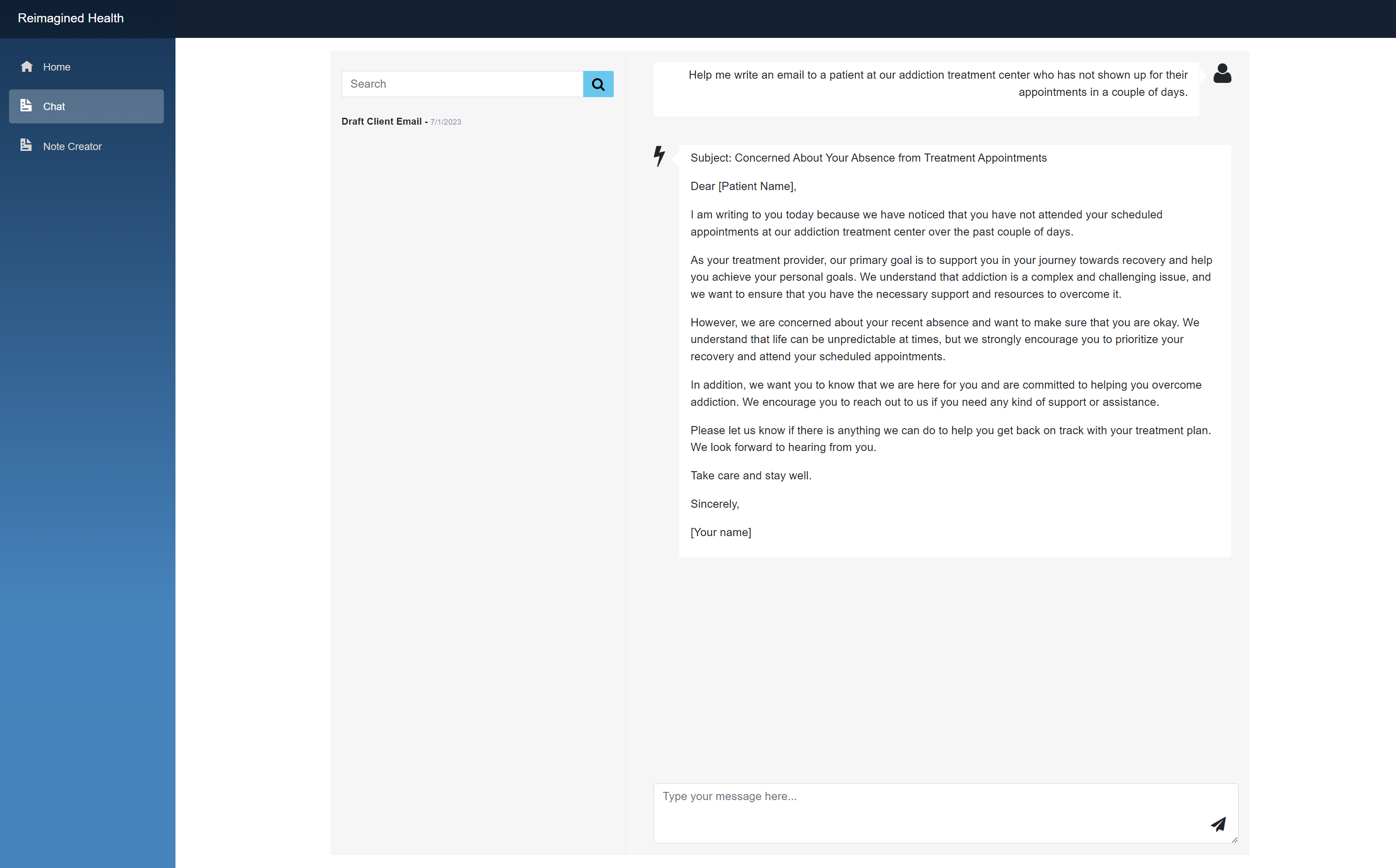
The use case highlighted underscores the potential of GPT to revolutionize patient communication in outreach and inbound referrals. With its capacity to decipher an email thread, comprehend the patient or family member’s context, and craft appropriate responses, GPT is reshaping patient interactions. This augmentation of pivotal communication touchpoints can not only enhance patient intakes, but also cultivate a deeply personalized patient experience.
Information retrieval (searching) and data entry account for more than 50% of the average user’s computer interaction time. Additionally, the average clinician spends approximately 4.5 hours per day working on a computer. Leveraging GPT’s capabilities to enhance these fundamental tasks can yield significant short-term benefits for organizations.
In particular, GPT can greatly improve core functions such as note drafting, note search & summarization, standard operating procedure (SOP) search, and omni-channel patient communication. While there is a growing trend towards the development of more therapeutic and consultative technologies, regulatory interventions may slow down the adoption of these technologies.
If you’d like to learn more about getting your own HIPAA compliant GPT system deployed Contact Us.
July 2023
This article was co-authored with the aid of Artificial Intelligence.